Contigo
- 3.5
- Rating
- 100.00K
- Installs
- Free
- Price

 Analysis by App-foxy
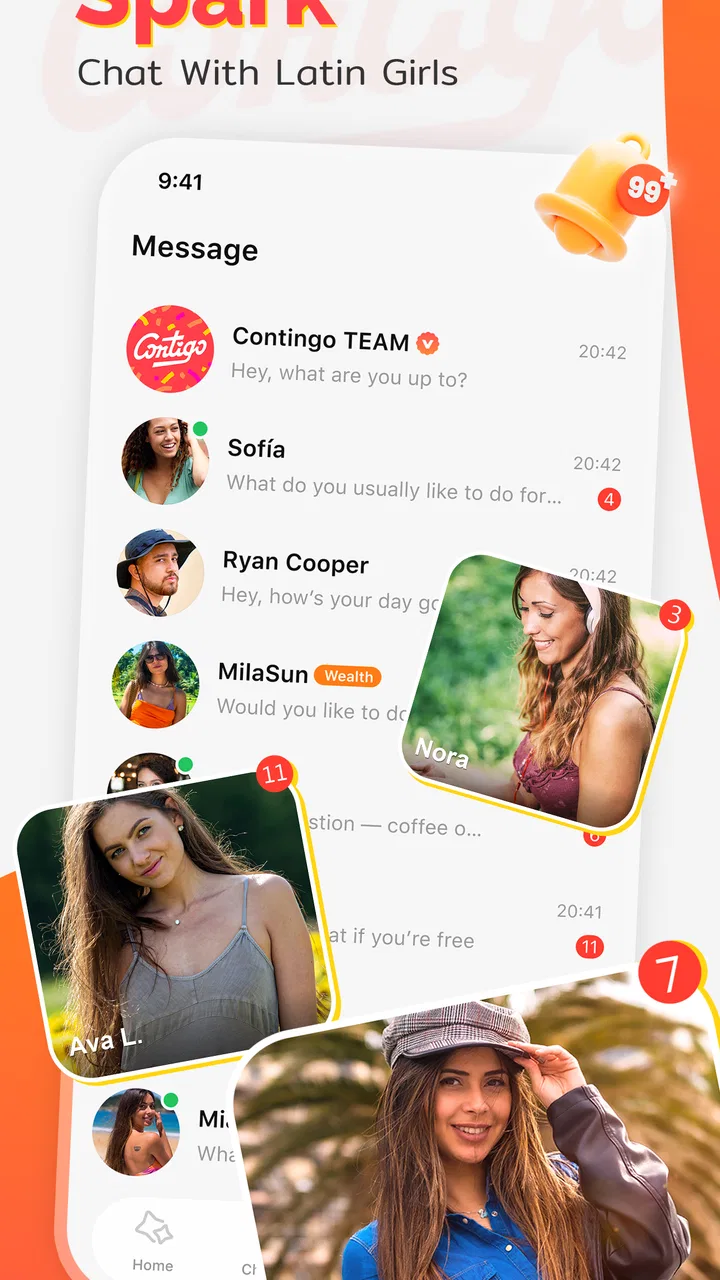
I spent time with Contigo as a social app built around meeting and staying in touch with people beyond your usual circle. Its central idea is simple: combine voice-based interaction with conversation so that sharing a moment feels more immediate than sending a standard text. That makes it interesting for users who find ordinary social feeds too passive, but it also means the app depends heavily on the quality of the people you meet and the way conversations develop.
Contigo is made by ContigoTeam and is available free of charge. It is aimed at teenagers and older users, with a Teen content rating, and the current release is version 1.2.1.0. The app has passed the early discovery stage with over one hundred thousand installs, although its average rating sits at three and a half stars from more than one hundred ratings. I read that combination as a useful warning: enough people are trying it to make the experience worth exploring, but the app is still not universally convincing.
How Contigo feels as a social space
The most noticeable difference between Contigo and a conventional social network is the emphasis on voice and conversation. A normal feed encourages quick reactions: scroll, tap, like, and move on. Contigo is better suited to moments when I want an exchange to feel more personal. Hearing someone’s voice can make a short interaction warmer than a row of typed messages, especially when the topic is casual and there is no need to compose a polished post.
You May Also Like

 AccuWeather: Weather Radar
AccuWeather Review: A Quick, Clear Forecast for Everyday Decisions
For everyday plans, the best forecast is the one you can understand quickly. AccuWeather makes rain timing, radar, and local conditions easy to act on, with a few trade-offs.

 Hill Climb Racing
Why Hill Climb Racing Still Turns Crashes Into One More Run
A tiny car, a bumpy hill and one more upgrade: Hill Climb Racing keeps resurfacing because its simple chaos makes every near-miss feel personal.

 AliExpress - Shopping App
AliExpress Makes Global Shopping Feel Personal, but Shoppers Bear the Risk
AliExpress turns a global marketplace into a pocket-sized discovery engine. Its reach is useful, its shopping loop compelling, and its trade-offs easy to miss.

 Lords Mobile: Kingdom Wars
Lords Mobile Is a Kingdom-Building Routine, Not a Quick Match
A case-by-case verdict on the building, battles, device demands, and social commitments that make Lords Mobile rewarding for some players and exhausting for others.

 PDF Scanner app - TapScanner
TapScanner Makes Paperwork Easier to Capture, Check, and Share
TapScanner makes scanning with a phone feel less like a rescue operation and more like a dependable step in getting work done. Its capture tools are useful, though not flawless.

 Block Blast!
 Shows How Much a Puzzle Game Can Leave Out
A quiet grid game shows why puzzle players increasingly value instant clarity, repeatable skill and low-pressure play—and where the genre still needs to catch up.
More From Our News Desk
View All News


That focus also changes the kind of user who will enjoy it. If you prefer quietly browsing photos or reading updates without speaking, the app may feel more demanding than familiar alternatives. On the other hand, people who like meeting international friends, practicing relaxed conversation, or turning a passing interaction into an actual exchange may find the format more engaging.
I would not approach Contigo expecting a complete replacement for every social tool on a phone. Its appeal is narrower and more specific. It is most useful when the goal is connection through conversation rather than building a carefully organized public profile. That distinction matters because it sets a realistic expectation before you invest time in finding people you genuinely enjoy talking with.
The cost is easy to understand, but the value needs judgment
The app itself is free to download and use, which makes trying it relatively low risk. There are in-app purchases ranging from forty-nine cents to ninety-nine dollars and ninety-nine cents per item. Those prices cover a very wide range, so I would avoid assuming that every useful part of the experience requires payment or that the most expensive option is necessary. The practical question is whether a paid item improves the kind of interaction you already want, rather than whether spending automatically makes the social experience better.
For a free user, the strongest value comes from discovering whether the community suits you. I would begin without buying anything, spend enough time learning how conversations work, and only consider a purchase after identifying a specific limitation that it addresses. This approach is especially important in a social app because money cannot guarantee interesting conversations, reliable replies, or friendships that continue beyond a first exchange.
Paid value is therefore personal rather than automatic. Someone who uses Contigo frequently and finds a purchase genuinely helpful may see good value in it. Someone who only wants occasional contact with global friends may be perfectly satisfied with the free experience. I would treat every optional purchase as a convenience decision, not as an entry fee for belonging.
What the voice-first approach does well
Voice can reduce the stiffness that often appears in text-only conversations. A short spoken message carries tone and rhythm, so a simple greeting can feel less formal. This is useful when two people are still getting to know each other and do not want to write long introductions. It can also help users who find typing across languages tiring, although the comfort of that experience depends on the people involved and the conversation itself.
Another strength is the possibility of more natural exchanges. Text-based social platforms often reward carefully edited posts, while voice invites a more spontaneous style. In my view, that makes Contigo better for small, genuine moments than for polished self-presentation. A user who wants to share how their day went, react to something in real time, or have a more human conversation may appreciate that difference.
There is also a useful middle ground between a public broadcast and a private messaging app. The idea of reaching people globally can open conversations that would not happen inside an existing group of friends. That broader social angle is the app’s most distinctive promise, but it is also where patience becomes important. A worldwide audience sounds exciting; in practice, finding compatible people requires some trial and error.
Three practical ways I would use it
My first suggested use is a short evening conversation rather than an all-day social routine. I would open the app with a modest goal, such as finding one or two interesting exchanges, instead of trying to keep up with everything. That prevents the experience from turning into another endless feed and makes it easier to notice whether the voice format actually adds something for me.
A second use is language and culture discovery through informal conversation. I would keep the first exchanges light, ask clear questions, and avoid sharing personal details too quickly. The global focus is valuable when curiosity is mutual, but it works best when both people understand that a good conversation does not require immediate trust or constant availability.
A third use is as a low-pressure way to reconnect with someone who is more comfortable speaking than writing. If a friend dislikes long text threads, a voice-centered exchange may feel easier for them. In that situation, Contigo is not competing with every social network; it is serving as a more conversational layer for people who communicate better aloud.
These uses reveal an important trade-off. The app can make interaction feel more personal, but voice also asks for more attention than silently reading a post. I would not recommend opening it during a crowded commute, a shared room, or any situation where speaking and listening are inconvenient. The format is a strength when I can participate properly and a weakness when I only have a few distracted seconds.
Where the experience may become frustrating
The rating of three and a half stars suggests that the concept will not work equally well for everyone. Social apps are unusually dependent on community momentum, and a good idea can still feel empty if the conversations available at a particular time do not match a user’s interests, language, or comfort level. I would judge Contigo over several sessions rather than after one quiet visit, but I would also set a personal limit: if the interactions remain repetitive or unhelpful, there is little reason to force the habit.
Voice introduces another layer of friction that text apps avoid. Some people are expressive in writing but reserved when speaking. Others may prefer to think before replying, while voice can create pressure to respond immediately. If you dislike spontaneous conversation, you may find the app less comfortable even when the underlying social idea appeals to you.
Privacy and personal boundaries also deserve attention in any service centered on meeting unfamiliar people. I would use a nickname or limited profile information at first, avoid sharing an address or daily routine, and move slowly before treating a new contact as a trusted friend. These are not reasons to reject Contigo; they are sensible habits for a global social environment, particularly for younger users covered by the Teen rating.
The purchase range is another reason to stay deliberate. A free app with optional items can be enjoyable, but the presence of a high-priced purchase means I would check the exact purpose of an item before confirming it. If the benefit is unclear, I would skip it. Social satisfaction comes mainly from the quality of conversation, so spending should remain secondary to finding people who communicate respectfully.
How it compares with familiar alternatives
Compared with a traditional text messenger, Contigo seems better positioned for discovery and voice-led interaction than for managing an established list of close contacts. A messenger is usually the stronger choice when I already know whom I want to reach, need dependable coordination, or want a clear record of practical details. Contigo makes more sense when the purpose is to encounter new people and start a more personal conversation.
Compared with a large public social network, it appears less focused on polished posts, broad audience building, and passive scrolling. That can be refreshing for someone tired of performance-driven feeds. The trade-off is that the experience may feel less useful if I want news, creator content, organized communities, or a detailed archive of my social life.
Compared with a dedicated voice-chat service, Contigo’s attraction is the social discovery angle rather than a structured group environment. Voice communities built around games, hobbies, or specific interests may be better for users who want predictable topics and organized rooms. Contigo is more appealing when I want conversation to begin from a wider social starting point, without committing to one established community.
In short, I would choose Contigo for spontaneous global conversation, a conventional messenger for people I already know, and a specialist community for focused interests. None of those choices makes the others obsolete. The right option depends on whether I value discovery, reliability, or structure most at that moment.
Who is likely to get the most from it
Contigo is a good match for curious users who enjoy hearing different voices and do not mind giving a new social space time to develop. It may also suit teenagers and adults who want a conversational alternative to text-heavy platforms, provided they are comfortable setting boundaries and handling contact with unfamiliar people.
I think it has particular potential for someone who feels that ordinary social feeds create plenty of activity but very little connection. The app’s voice emphasis can make a small exchange feel more direct. It is also worth considering for people who want to meet international friends casually rather than join a formal language course or a narrowly defined interest group.
I would skip it if I want a quiet, private tool for communicating only with existing friends. I would also look elsewhere if I need strong organization, professional networking, detailed content discovery, or a social environment built around one specific hobby. Users who dislike speaking with new people may download it and quickly conclude that the central format is not for them, which is a reasonable outcome rather than a flaw to ignore.
My verdict on trying Contigo
My recommendation is to try Contigo for free, but to approach it as a focused conversation app rather than another general-purpose network. The free entry point makes experimentation sensible, and the voice-centered idea gives it a clear identity. I like that it aims for more direct human contact instead of relying entirely on silent scrolling, and I can see why the global angle would appeal to someone who enjoys meeting people outside their normal circle.
At the same time, I would not promise that every user will find lasting value. The experience depends on the available community, personal comfort with voice, and the effort required to find compatible conversations. The optional purchases should be considered only after the free experience has shown a real need, especially because the available items span from a small amount to nearly one hundred dollars.
For me, the sensible decision is a cautious yes: install it, test the free experience, protect personal information, and judge the quality of actual conversations rather than the idea alone. ContigoTeam has created an app with a recognizable social angle, but it is best for people who actively want voice and discovery. If that describes you, it is worth exploring. If you mainly want dependable messaging with familiar contacts, a standard messenger will probably deliver better value and less friction.
FAQs for Contigo
01What is Contigo and what can I use it for?
Contigo is a mobile application designed to bring its main services and tools together in one convenient place. Depending on the version and region, it may help users manage accounts, access personalized information, communicate with a service provider, or complete everyday tasks from a smartphone. Before downloading, check the official store description to confirm that its available features match your needs.
02Is Contigo free to download and use?
Contigo can generally be downloaded at no cost from the official Android or iOS app store, although some features may depend on an existing account, subscription, service plan, or separate charges. The app itself may be free while certain products or transactions inside it are not. Review the store listing and the provider’s terms before entering payment information.
03What devices and operating systems are compatible with Contigo?
Compatibility depends on the release available in your country and the operating system installed on your device. Contigo is intended for supported Android and iOS smartphones, but older phones may not meet the minimum requirements or may offer limited performance. Check the Google Play or App Store listing for the required version, available storage, and any device restrictions before installing.
04Does Contigo require an account or personal information?
Many of Contigo’s useful functions may require users to create an account or sign in with existing credentials. Registration can involve information such as an email address, phone number, identification details, or service-related data. Only provide information through the official application, use a strong password, and read the privacy policy to understand how your data is collected, stored, and used.
05Is Contigo safe and reliable to use?
Contigo should be downloaded only from the official Google Play Store or Apple App Store to reduce the risk of counterfeit or modified versions. The app may use login protection and encrypted connections, but no online service is completely risk-free. Keep the application updated, avoid sharing verification codes, review requested permissions, and contact official support if you notice suspicious activity or unexpected account behavior.
Pros
- Simple interface makes route planning easy for new users.
- Real-time arrival updates help reduce uncertainty while waiting.
- Supports everyday commuting with schedules and nearby stop information.
- Useful for checking alternative routes during delays or disruptions.
- Available on mobile
- making transit details accessible while traveling.
Cons
- Coverage and accuracy can vary by city or transit provider.
- Some live updates may be delayed when agency data is unavailable.
- Requires location access for the most convenient nearby-stop features.
- Frequent travelers may find advanced trip planning options limited.
- Battery and mobile data use can increase when location tracking stays active.

Contigo
Gallery